Dihydrojasmone AC
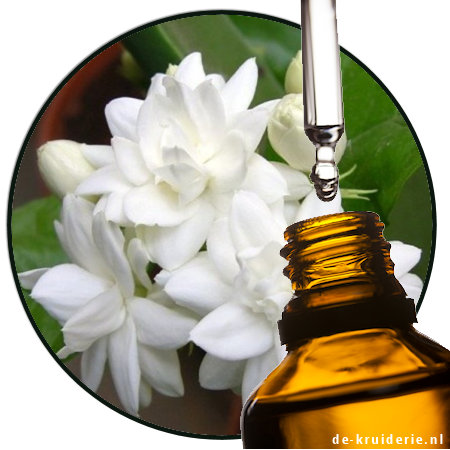
The scent: fresh-sweet jasmine with woody and spicy aspects and a hint of myrrh.
Brings more depth to jasmine accords.
Can be used to replace Cis-Jasmone; Dihydro Jasmone is slightly less green than Cis-Jasmone.
CAS: 1128-08-1
EINECS: 214-434-5
Purity: 85%
Fragrance strength: Medium (340 hours on fragrance strip)
1st Class Quality Products
All fragrances are selected with care
Delivery from stock
We supply everything from our own stock, unless otherwise stated on the product itself.
Dihydrojasmone is a fragrance that evokes a sense of timeless elegance and natural beauty.
The aroma is a harmonious blend of floral, jasmine-like notes, interwoven with woody and spicy undertones.
It carries a subtle fruity brightness, reminiscent of sunny orchards, and a powdery freshness.Dihydrojasmone is synthesized through a series of chemical reactions, often starting with levulinic acid.
Here’s a simplified overview of the process:
- Formation of a Weinreb Amide: Levulinic acid is reacted with 1,1′-carbonyldiimidazole (CDI) to form a Weinreb amide, which is a key intermediate.
- Conversion to a Ketal: The carbonyl group of the amide is converted into a ketal using p-toluenesulfonic acid, trimethyl orthoformate, and methanol.
- Grignard Reaction: The ketal is reacted with hexyl magnesium bromide (a Grignard reagent) to produce a diketone.
- Cyclization: The diketone undergoes an aldol reaction under basic conditions, leading to the formation of dihydrojasmone.
This process results in a light brown liquid with the characteristic floral, woody, and jasmine-like scent.
The synthesis is often refined to achieve high purity and yield, making it suitable for use in the fragrance industry
Synonyms:
– 2-Pentyl-3-methyl-2-cyclopenten-1-one
– 2-Amyl-3-methyl-2-cyclopenten-1-oneOccurs naturally in: Osmanthus absolute