Synonyms:
– 1,3-Cyclohexadiene-1-carboxaldehyde, 2,6,6-trimethyl-
– Dehydro beta-cyclocitral
– Safralan
– Safranal P (Givaudan)
Occurs naturally in:
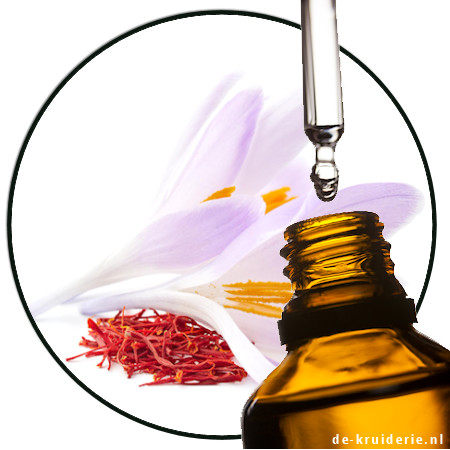
– Saffron – Crocus sativus L. 60%
– Absinth wormwood – artemisia absinthium 0.60%
– Linden blossom – tilia cordata Mill. 0.05%
– Olibanum – Boswellia frereana 0.01%
Safranal is widely used in the perfume industry for its distinctive and pleasant aroma.
Here are some key characteristics of the aroma:
- Warm and Spicy : Safranal has a warm, spicy scent reminiscent of the rich aroma of saffron. This warmth adds depth and complexity to fragrances in which it is used.
- Light Sweet : It also has a slightly sweet undertone that balances the spicy notes, making it a versatile component in various fragrance compositions.
- Earthy and Herbaceous : In addition to the warmth and sweetness, safranal also has earthy and herbaceous properties. These characteristics contribute to the overall unique and complex aroma.
- Intense and Rich : The scent of safranal is quite intense and rich, which means it is usually used in small amounts to achieve the desired olfactory effect without overpowering the mix.
Safranal is highly prized in the world of perfumery for its ability to add a unique and refined touch to various fragrance compositions, especially those with oriental, woody and spicy profiles.
Here are some of the ways safranal is used in perfumes:
- Fragrance component : Safranal is mainly valued for its warm, spicy and slightly sweet fragrance profile. It adds depth and complexity to perfume compositions, making it a popular choice for luxury fragrances.
- Complementary Notes : Safranal combines well with ingredients such as suederol and methyl ionones, which are often used to create leather scents. It can also be combined with green, woody, and spicy scents to create interesting and unique scents.
- Top and Heart Notes: Safranal can be used in both the top and heart notes of a fragrance, providing an initial burst of warmth and spiciness that then evolves into a more complex and longer-lasting scent.
- Blending : Safranal blends well with other essential oils and fragrance components, including floral, woody and oriental notes. This versatility allows perfumers to create unique and harmonious fragrance profiles.
- Fixative : Because of its strong and long-lasting aroma, safranal can act as a fixative, helping to stabilize and prolong the scent of other fragrance components in the perfume.
- Signature Notes : Given its unique and recognizable scent, safranal is often used as a signature ingredient in high-end perfumes, adding to their distinctiveness and appeal.
We also have Safraleine from Givaudan in our range.
Safranal and safraleine are both fragrances commonly used in perfumery, but they have different properties and uses:
- Safranal :
- Origin : Safranal is a natural component found mainly in saffron (Crocus sativus), but is also produced synthetically.
- Aromatic profile : It has a warm, spicy and slightly sweet scent reminiscent of saffron. It is often used to add depth and complexity to fragrances.
- Uses : Safranal is used in various fragrance compositions, especially in oriental, woody and spicy perfumes. However, it is heavily regulated due to potential allergenic properties.
- Safraleine :
- Origin : Safraleine is a synthetic fragrance and does not occur naturally.
- Aromatic profile : It has a spicy, leathery and slightly bitter odor. It is often described as a scent reminiscent of suede and tobacco.
- Uses : Often used in leather accords, safraleine can add an energetic and luxurious touch to both feminine and masculine fragrances.
While both compounds have saffron-like aspects, safranal is more focused on the warm and spicy nuances of saffron, while safralein has more leathery and tobacco-like qualities. They can both be used to create unique and sophisticated fragrance compositions depending on the desired scent profile.