Isoeugenol
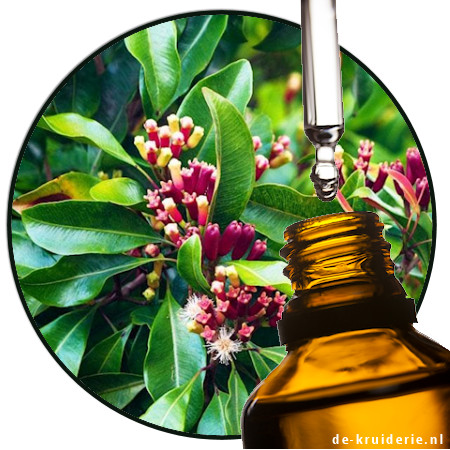
Natural source: Syzygium aromaticum (Myrtaceae)
CAS: 97-54-1
Quality (composition): Fractional distillation, Trans-Isoeugenol min. 92% & sum of isomers min. 99%.
Appearance: Liquid, viscous oil, pale yellow to yellow
Origin: Indonesia
Scent: warm, spicy and floral, with sharp spiciness (from clove) in the top, carnation-like, rose-enhancing, slightly floral and rich in the heart and base nuances are sweet-fruity and round, giving depth and a soft warmth blend.

⚠️ Isoeugenol has very strict IFRA restrictions and is practically not allowed in many cosmetic applications. Use only within IFRA limits.
“Isoeugenol is used by hobby perfumers to study the spicy, floral warmth of vintage perfumes and reconstruct historical formulas (strict IFRA restrictions).”
1st Class Quality Products
All fragrances are selected with care
Delivery from stock
We supply everything from our own stock, unless otherwise stated on the product itself.
Fragrance group and fragrance character
- Main group: Spicy – because of its pronounced clove-like odor.
- Subgroup: Floral – because it is often used in floral accords (rose, carnation).
- Aroma: Sweet-fruity, spicy, slightly clove-like, sometimes with a hint of vanilla-like.
- Use: Base note in perfumes, but also in soaps, candles and air freshener.
Application in perfumery
- Floral accords: Isoeugenol enhances the spicy facets of rose and carnation.
- Spicy perfumes: Gives depth and warmth, often combined with cinnamon, clove or nutmeg.
- Base note: Relatively stable and remains well present in the fragrance composition.
- Dosage: Is usually used in low concentrations (0.1-2%) because of its potent and allergenic properties.
🌫️ The value of Isoeugenol for vintage perfume reconstructions
Isoeugenol is one of those classic fragrances that played a huge role in perfumes from the first half of the 20th century. It is warm, spicy, floral and has a recognizable carnation and rose enhancing power. At a time when perfumes were rich, full and distinctive, Isoeugenol was one of the building blocks that gave compositions their depth, warmth and spicy elegance.
In vintage perfumes, Isoeugenol provided:
- a spicy, warm glow in the heart
- a carnation-like facet that gave florals more character
- a rose enhancing effect that made classic rose perfumes fuller
- a deep, slightly sweet base that made perfumes last longer
- a vintage signature you instantly recognize in old chypres and florals
It was an essential ingredient in classic perfumes such as carnation bouquets, aldehydic florals, ancient rose perfumes and oriental compositions.
🧪 Why hobby perfumers still use it today
Due to strict IFRA restrictions, Isoeugenol is hardly applicable in modern perfumes. But for hobby perfumers and perfume historians, it is:
- an indispensable reference material
- essential for reconstructing vintage perfumes
- important to understand how classical florals were constructed
- a key to the carnation and rose character of old perfumes
- valuable for education and scent training
Without Isoeugenol, reconstructions often miss:
- the spicy warmth
- the carnation-like sharpness
- the classic rose depth
- the typical “vintage floral” signature
With Isoeugenol, an old formula suddenly falls into place – like reviving a forgotten facet of a flower.
🕰️ The value to perfume history
Isoeugenol shows how perfumes used to be constructed: richer, spicier, fuller and less “clean” than modern compositions. It is a key to understanding classic florals and chypres, and an important part of perfume education.
For hobby perfumers, it is a time capsule of floral perfumery.
IFRA restrictions (51st Amendment) - Isoeugenol
| IFRA Class | Product type | Max usage level (%) |
|---|---|---|
| 1 | Products for the lips | 0,0% |
| 2 | Products for the armpits | 0,006% |
| 3 | Products for face/body applied with fingertips | 0,12% |
| 4 | Fine fragrances | 0,11% |
| 5A | Body lotion (hands/palms, leave-on) | 0,027% |
| 5B | Face cream (hands/palms, leave-on) | 0,027% |
| 5C | Hand cream (hands/palms, leave-on) | 0,027% |
| 5D | Baby products (hands/palms, leave-on) | 0,009% |
| 6 | Oral/lip exposure products | 0,0% |
| 7A | Rinse-off hair products with hand contact | 0,22% |
| 7B | Leave-on hair products with hand contact | 0,22% |
| 8 | Products with anogenital exposure (e.g., tampon) | 0,009% |
| 9 | Rinse-off body products | 0,21% |
| 10A | Household products | 0,21% |
| 10B | Household sprays/aerosols with hand contact | 0,75% |
| 11A | Products with skin contact via inert substrate without UV exposure | 0,009% |
| 11B | Products with skin contact via inert substrate with UV exposure | 0,009% |
| 12 | Air fresheners without direct skin contact | 100% |