Ambretone (Takasago) AC
Character: powerful, sweet, powdery, slightly animalic, ambery
CAS No.: 37609-25-9
Fragrance Group: Musk
Chemical name: (5Z)-cyclohexadec-5-en-1-one
Appearance: Solid, slightly powdery or waxy
Stability: very substantive, stays on a fragrance strip for a long time (>400 hours)
Dosage: usually in low doses 0.1 – 2% to give a musky base.
Use: as a base note in perfumes for long-lasting fixation; adds depth and senuality to floral, amber and musk compositions
IFRA: no restriction (Cat.4)

Ambretone – modern musk, luxurious, powdery and irresistible.
1st Class Quality Products
All fragrances are selected with care
Delivery from stock
We supply everything from our own stock, unless otherwise stated on the product itself.
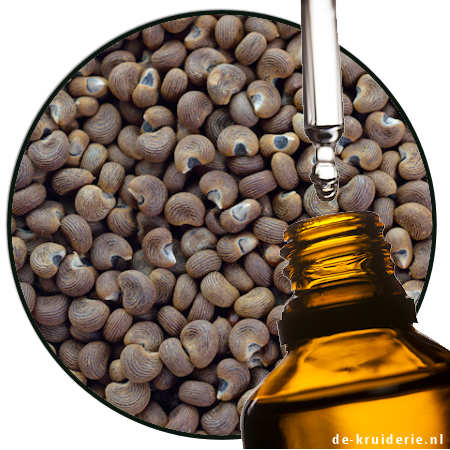
Ambretone is like a whisper of luxury on your skin – powdery, warm, and endlessly elegant.
Ambretone by Takasago is a macrocyclic musk with exceptional substantivity and a luxurious, powdery softness.
It is distinguished by its exceptional diffusion and luxurious texture, making it a favorite ingredient of perfumers seeking a sophisticated musk with a touch of animalic warmth.
It adds a velvety, powdery dimension that transforms a composition from simple to opulent and complex.
Fragrance profile
- Main character: intense powdery musk
- Nuances: soft animalic, ambery, with a velvety roundness
- Comparison: reminiscent of classic nitro-musks, but cleaner and more modern
Use in perfumery
- Base note/fixative: Ambretone is a macrocyclic musk that anchors a perfume for a long time.
- Character: powdery, soft-animalic, ambery, luxurious.
- Combinations: works particularly well with floral accords (rose, iris, jasmine), amber notes and woods.
- Application: both in fine fragrance (perfumes, eau de parfum) and in cosmetics and detergents due to its stability and substantivity.
- Stability: good resistance to heat and light, making it widely applicable in various product types.
💡 Tips
- Dosage: in practice 0.1-2% often sufficient to give a perfume a luxurious musk body.
- Layering: combine with lighter musks (such as Galaxolide or Habanolide) to create a complex musk bouquet.
- Balance: use Ambretone to give floral accords more sensuality without making them too heavy.
Main related musks
| Name | Type | Fragrance profile | Particulars |
|---|---|---|---|
| Velvione | Macrocyclic musk | Powdery, soft, amber | Close relative of Ambretone; often used as an alternative |
| Muscenone | Macrocyclic musk | Sweet, fruity, slightly animalic | Very substantive, loved in fine fragrance |
| Exaltone | Macrocyclic musk | Warm, animalic, musky | Classic musk with high substantivity |
| Ambrettolide | Macrocyclic musk lactone | Sweet, fruity, floral | Natural association with ambrette seed |
| Habanolide | Macrocyclic musk | Metallic, fresh, clean musk | Gives modern, transparent musk feel |
| Helvetolide | Macrocyclic musk | Fruity, pear-like, musk | Popular in modern fruity perfumes |
| Romandolide | Macrocyclic musk | Clean, soft, musky | Transparent, skin-like effect |
| Ethylene Brassylate | Macrocyclic musk | Sweet, powdery, musky | Widely used in detergents and cosmetics |
| Galaxolide | Polycyclic musk | Clean, white musk | Very popular in consumer products |
Trivia
- Ambretone and Velvione are chemically closely related; Ambretone is often seen as the more luxurious, more powerful variety.
- Muscenone and Exaltone are classics that give a more animalistic musk tone.
- Ambrettolide is special because it is a lactone and adds a fruity-floral nuance.
- Habanolide and Helvetolide bring a modern, fresh and transparent musk feel, ideal for contemporary perfumes.
- Galaxolide and Ethylene Brassylate are more "white musks" and are widely used in mainstream perfumery and household products.